The Ethanol Express: How India’s Great Green Fuel Leap Is Leaving Drivers, Buyers and Common Sense in the Dust
Published on June 21, 2026 | Category: Politics
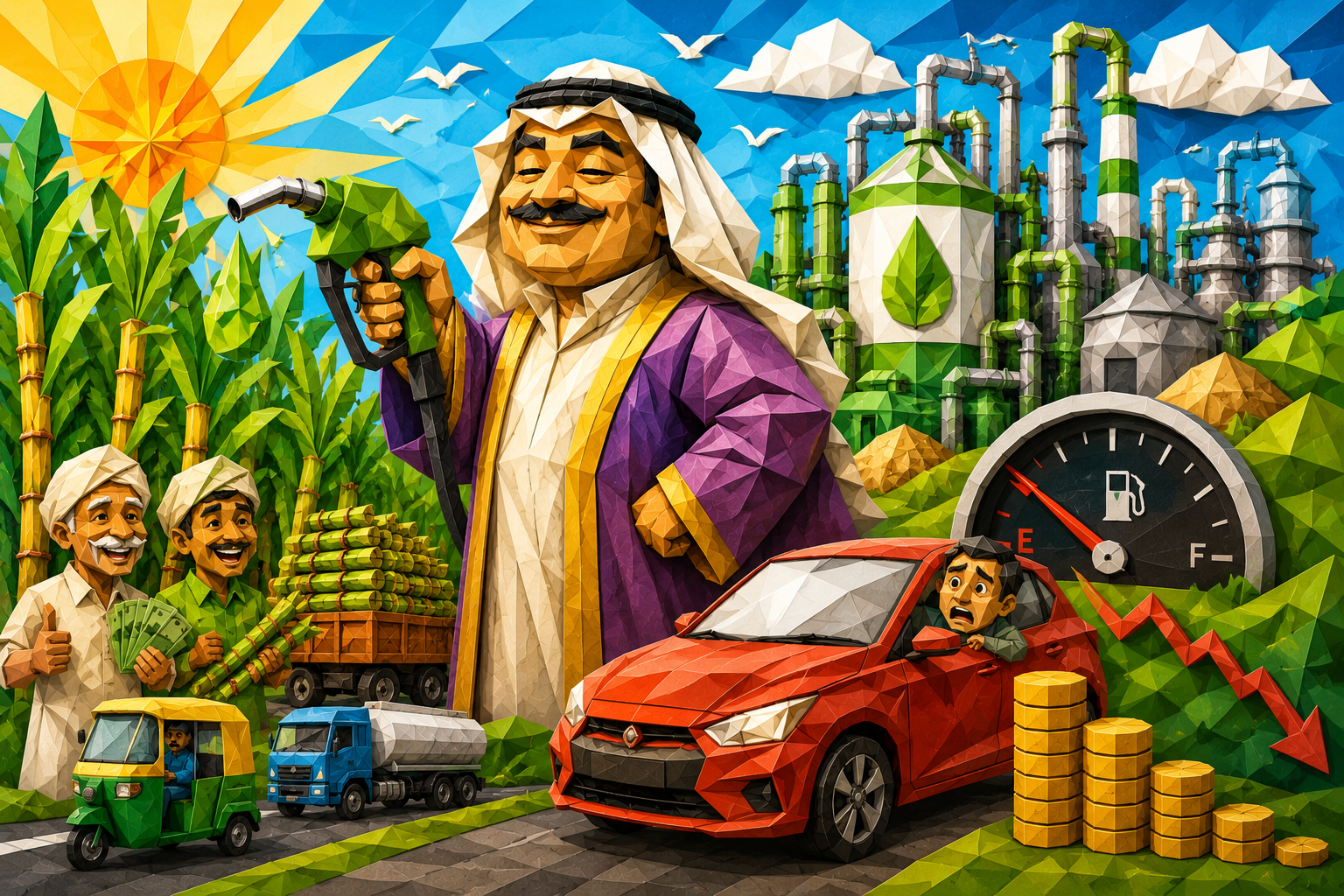
Ramesh from Nagpur pulls into the neighbourhood pump, resigned. His 2019 Swift, once a reliable 18 kmpl companion, now coughs up closer to 14 kmpl on the mandatory E20 brew. “Every fill-up feels like I’m paying the same for less,” he says, as the attendant shrugs - no pure petrol here, sir. Down in Pune, a delivery rider watches his Activa’s legendary mileage evaporate. In Hyderabad, Priya scrolls through yet another forum thread instead of booking that i20 she had her eye on. “Why drop lakhs on a car when the fuel rules keep changing faster than the traffic signals?”
This is the ground reality of India’s ethanol odyssey - a policy sprint dressed up as Atmanirbhar triumph. The government hit its 20% blending target years ahead of schedule. Ministers issued triumphant statements. Oil marketing companies patted themselves on the back. Farmers in sugarcane belts smiled at better returns. And millions of vehicle owners? They’re quietly subsidising the experiment with thinner wallets, puzzled mechanics, and a growing sense that their cars weren’t consulted before the chemistry lesson began.
The Man Who Owns the Narrative (If Not the Ministry)
No discussion of this saga is complete without Nitin Gadkari. The Road Transport and Highways Minister has emerged as the most enthusiastic pitchman for higher ethanol blends - E85 pilots, E100 regulations, flex-fuel dreams - even though fuel policy sits squarely with the Petroleum Ministry. “People laughed when I talked about 100% ethanol,” he has said, beaming with the confidence of a man who sees sugarcane fields as the new oil wells.
The subplot is pure Ken catnip. Companies linked to Gadkari’s family have seen revenues and stock prices explode in near-perfect sync with the policy push - one entity reportedly jumping from modest crores to hundreds in short order. Gadkari waves away conflict-of-interest questions with trademark candour: he’s not short of money, his brain is worth ₹200 crore a month, and this is all about farmers, not family ledgers. Fair enough. But when the minister without the portfolio becomes the face of the biggest fuel overhaul in decades, optics matter. It’s like the highways czar deciding to redesign your engine because he knows a guy with excellent molasses connections.
The Fuel Menu: Choices That Aren’t Really Choices
E0 (Pure Petrol): The unicorn. Once standard, now you hunt for premium variants like IndianOil’s XP100 at ₹150-160+ a litre in select outlets. Regular pumps? Forget it. The nationwide E20 mandate made blending non-negotiable for most.
E20: The daily special, priced around ₹102 per litre in Delhi - same as before, despite ethanol’s lower energy punch. Automakers admit 2-4% mileage loss in lab conditions; real-world reports from owners are harsher - 5-12% or more, especially in older or city-driven cars. Bengaluru Baleno owners dropping from 13-14 kmpl to 9-11. Pune drivers seeing worse. Ethanol’s fondness for water brings corrosion, clogged injectors, and rubber seals that swell like overfed relatives. Insurance companies hover in grey-zone limbo: manuals say “petrol,” reality delivers the cocktail, and claims for related wear can turn into delightful paperwork adventures.
E85 and E100: The ambitious sequel. E85 is already at ~₹82 per litre in pilots - ₹20 cheaper nominally, but with 25-30%+ efficiency penalty, your cost per kilometre becomes an optimistic spreadsheet exercise. E100 dreams hover in the ₹82-87 range. Flex-fuel cars from Maruti, Hero and others are incoming, often with a premium. For the vast existing fleet? Adaptation, modifications, or quiet endurance. Scalability, water use for sugarcane, and the eternal food-vs-fuel tension remain politely unaddressed in victory speeches.
The Uncertainty Killing New Car Sales
Here’s the part that should worry showroom managers. A LocalCircles survey found 43% of people planning to buy a vehicle may defer or skip it entirely over the next year, thanks to the E20-to-higher-blends whiplash. Team-BHP threads are flooded with hesitation: “I was ready for a Hycross, but now…” Dealerships report quiet cancellations. Why commit 10-15 years of EMIs when the government is accelerating from E20 to E30/E85/E100 faster than you can say “policy continuity”? New “E20-compliant” cars might need further upgrades soon. Pure petrol options are vanishing. The result is classic Indian consumer caution: wait and watch the fuel drama unfold.
Priya isn’t alone. Prospective buyers across 300+ districts are doing the maths - mileage drops, potential repair spikes, insurance grey zones, and the nagging feeling that today’s compliant car could be tomorrow’s retrofit candidate.
The Irony Tank Is Always Full
India’s ethanol push has merits on paper: forex savings in the lakhs of crores, rural income boosts, lower emissions in controlled tests. But execution has the subtlety of a sledgehammer. No real choice at most pumps. Spotty transparency on actual blends. Older vehicles bearing the brunt. And new buyers left in a fog of uncertainty while flex-fuel prototypes get the glossy launches.
Done gradually, with genuine options, vehicle compatibility upgrades, and pricing that honestly reflects energy content rather than political optics, this could have been smoother. Instead, it feels like mandating everyone switch to a new diet overnight and acting surprised when stomachs (and engines) protest. Ramesh will keep filling up. Priya will keep scrolling. Gadkari will keep championing. And the rest of us will drive on, sarcastically toasting “Jai Ethanol” while calculating the hidden cost in every kilometre.
Atmanirbhar Petrol, indeed. Now with 100% ambition, variable mileage, complimentary irony, and a generous side of purchase paralysis. Your move, policymakers - offer clarity, or watch the showroom silence deepen.